
NASA has taken another big step toward future human missions to Mars. In partnership with Blue Origin and Rocket Lab, the agency has launched two small spacecraft that will travel to Mars to study how the Sun and solar wind affect the Red Planet.
These twin probes are part of a mission called ESCAPADE, short for Escape and Plasma Acceleration and Dynamics Explorers. Their main goal is to learn how charged particles from the Sun have slowly stripped away Mars’s atmosphere over billions of years. The data will help scientists understand what happened to Mars, and how to protect future astronauts and technology on and around the planet.
Launch Details and Key Partners
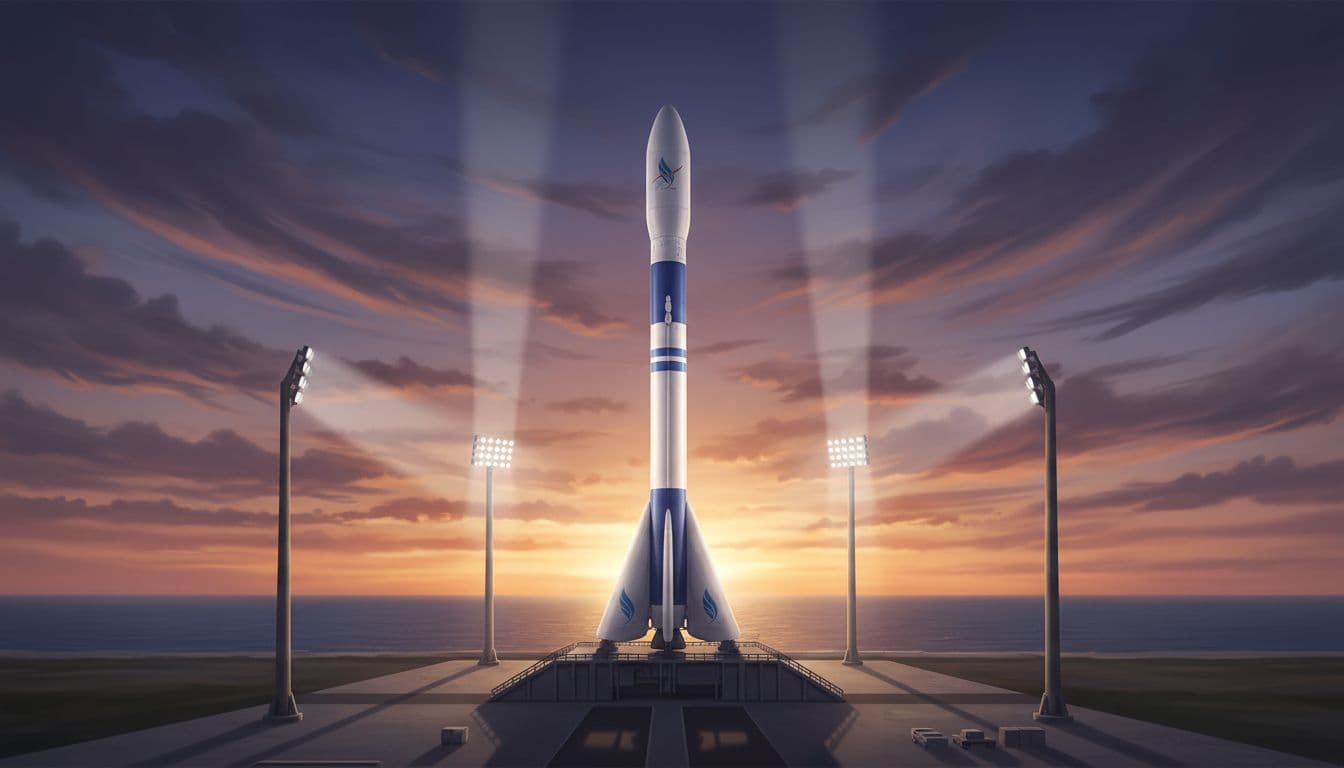
The ESCAPADE mission lifted off aboard a Blue Origin New Glenn rocket from Launch Complex 36 at Cape Canaveral Space Force Station in Florida. Liftoff took place at 3:55 p.m. EST.
Rocket Lab built the twin spacecraft. The mission is led by the University of California, Berkeley, which will manage the science side and help coordinate operations. By 10:35 p.m. EST on launch day, ground controllers had confirmed contact with both spacecraft, a major milestone that shows they survived the trip to space and are working as expected.
NASA also used this launch to test new space communications technology. A payload from Viasat sent rocket telemetry data through a commercial satellite network back to Earth. This experiment supports NASA’s push to use more commercial services to support science missions in deep space.
Why Study Mars and the Solar Wind?
Billions of years ago, Mars likely had a thicker atmosphere and liquid water on its surface. Today, it is a cold, dry planet with a thin atmosphere and no global magnetic field. Scientists believe the constant stream of charged particles from the Sun, called the solar wind, has played a major role in this change.
The solar wind moves at about a million miles per hour. When it hits a planet, it can strip away gas from the upper atmosphere, especially if the planet does not have a strong global magnetic field like Earth does. Over time, this process may have removed much of Mars’s air, cooling the planet and causing its surface water to disappear.
ESCAPADE will measure how this process is happening right now. By seeing how solar activity and solar storms interact with Mars’s upper atmosphere and magnetic environment, scientists can better model how the planet changed over time. This will also help them predict how future solar storms could affect astronauts, habitats, and equipment on Mars.
A Unique Journey: Loitering in Deep Space
Instead of heading straight for Mars after launch, the twin ESCAPADE spacecraft will first travel to a special point in space called Lagrange point 2, or L2. This point is about a million miles from Earth, on the opposite side of our planet from the Sun.
Right now, Earth and Mars are on opposite sides of the Sun. That makes the trip longer and more difficult. By waiting at L2, the spacecraft can “loiter” in space until the alignment between Earth and Mars is better. In November 2026, when the two planets are better lined up, the spacecraft will swing back past Earth and use our planet’s gravity to slingshot toward Mars.
This strategy is different from most past Mars missions, which launch only during short, ideal windows that come roughly every two years. ESCAPADE shows a new approach. In the future, missions could launch more often, move to a holding orbit near Earth, then begin their trip when the timing is right.
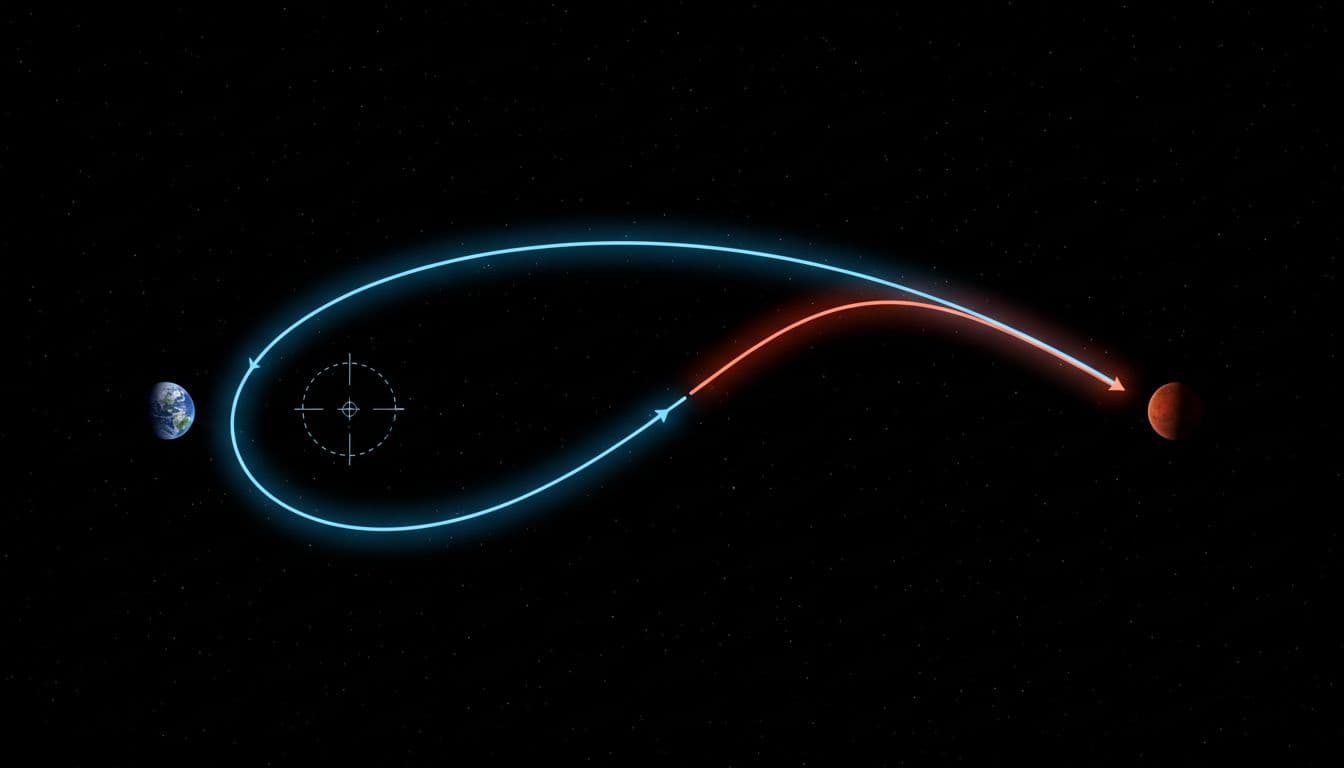
On the way to L2, ESCAPADE will also pass through a little-studied region of Earth’s magnetic field called the magnetotail. This long, stretched region trails away from Earth in the direction opposite the Sun. ESCAPADE will be the first mission to explore this distant part of the magnetotail on its way to another planet, giving scientists bonus data about our own space environment.
First Dual-Spacecraft Mars Orbiter Mission
ESCAPADE is expected to arrive at Mars in September 2027 after about a 10‑month cruise from its Earth departure. Once there, the two spacecraft will become the first coordinated dual-spacecraft mission to orbit another planet.
At first, they will fly in a “string-of-pearls” formation. This means one spacecraft will follow the other along a similar path, passing through the same regions of space within a short time of each other. By comparing their measurements, scientists can see how conditions change over minutes or hours, something that is hard to do with just one spacecraft.
Around June 2028, the main science campaign will begin. The spacecraft will measure particles, electric and magnetic fields, and other properties of the Martian space environment. About six months later, they will move into slightly different orbits. One will travel closer to Mars, and the other will stay farther away.
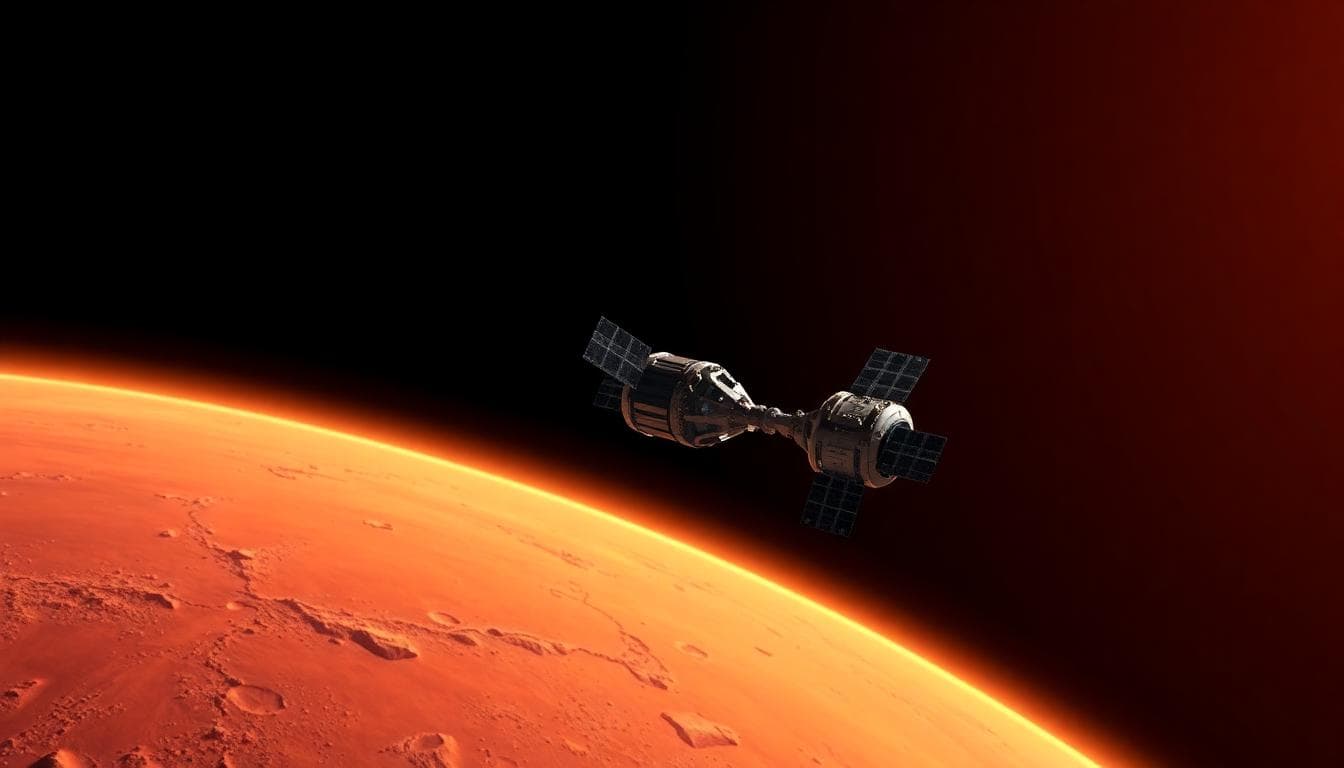
With this setup, ESCAPADE will be able to “see” how solar wind and space weather affect Mars from two different vantage points at the same time. This stereo view will give researchers a 3D picture of how energy and particles flow around the planet and into its upper atmosphere.
Preparing for Human Exploration of Mars
While ESCAPADE is a science mission, it also has a clear link to future human exploration. Space weather can pose a threat to astronauts, electronics, and communication systems. Solar storms can send bursts of radiation and energetic particles into space that may harm people and damage hardware.
By studying how these events play out at Mars, ESCAPADE will help NASA design safer missions. The data will support plans for radiation shielding, timing of surface activities, and protection of life support systems. Knowing how Mars’s thin atmosphere and weak magnetic environment respond to the solar wind is essential for long-term human presence on the planet.
ESCAPADE also shows how small, relatively low-cost spacecraft can take on ambitious deep space missions. If successful, this model could be used for future Mars orbiters and other planetary missions, giving scientists more frequent and flexible ways to explore the solar system.
Looking Ahead
The launch of ESCAPADE on Blue Origin’s New Glenn rocket marks an important moment for both science and commercial spaceflight. It highlights new partnerships between NASA, private companies, and universities. It also shows fresh ideas for mission design, such as loiter orbits and dual-spacecraft operations around another world.
Over the next few years, the twin spacecraft will travel millions of miles, wait in deep space, swing past Earth, and finally settle into orbit around Mars. As they begin to send back data, we will learn more about how the Sun has reshaped Mars over time and what it will take to send humans safely to the Red Planet.
For now, the mission is just beginning, but ESCAPADE is already opening new paths for Mars exploration and the future of human space travel.
To contact us click Here .