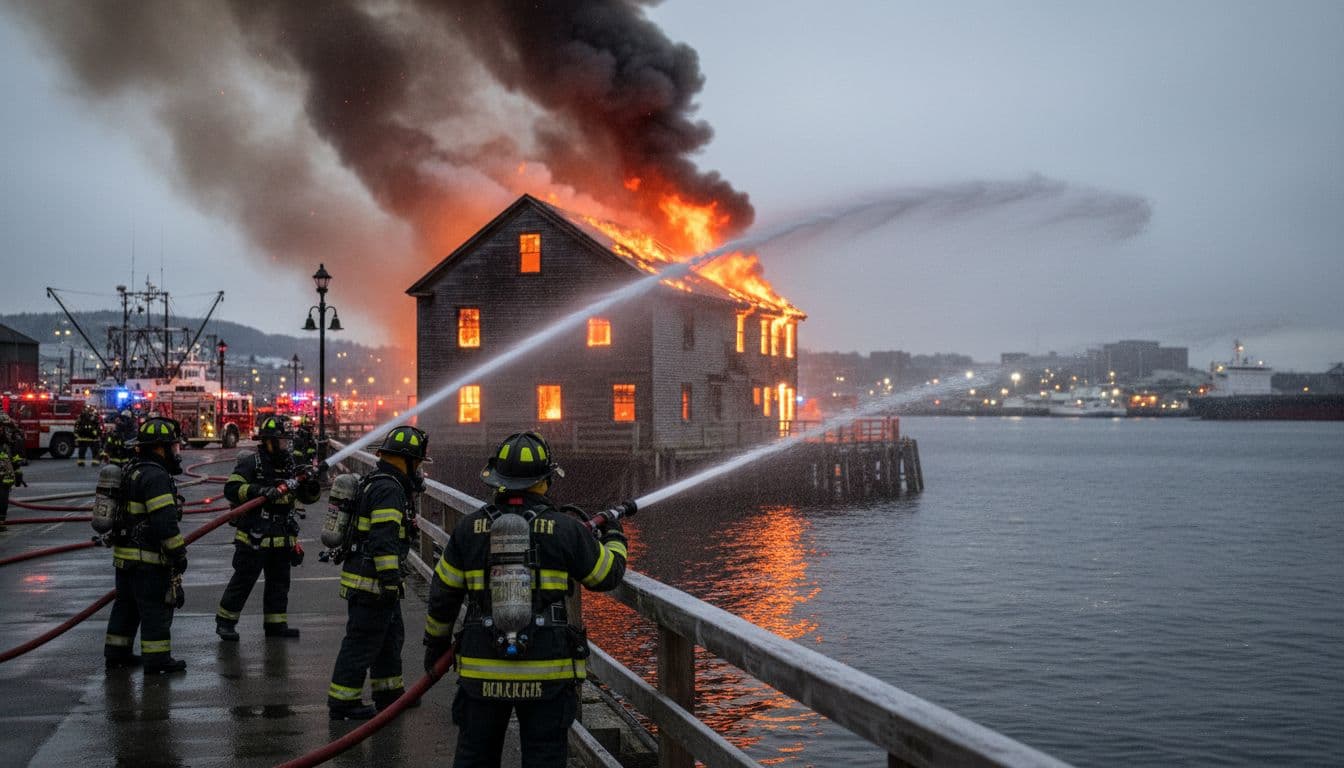
A major fire that broke out Friday evening on Portland’s Custom House Wharf is now under control, according to officials. The blaze drew a large emergency response to one of the city’s busiest waterfront areas, just off Commercial Street in the Old Port, and caused heavy damage to at least one building on the wharf.
Crews were called to the scene at about 5:30 p.m. Friday. The fire was visible from the water, and Casco Bay Ferry Lines was among the first to report it after spotting a burning building from the harbor.
Officials said the building where the fire started is considered a total loss, and nearby properties were also damaged. One firefighter suffered minor injuries, but no hospitalizations were reported.
Fast Response, Tough Conditions
Even with a strong and rapid response, firefighters arrived to find a fire that already had momentum. Portland Fire Deputy Chief Jon Hendricks said the flames appeared to have a head start, but crews moved quickly to keep it from spreading along the rest of the wharf.
“Unfortunately it looked like the fire had a pretty good head start on us when we got down here, but the first companies did a great job, and they made a really aggressive attack to keep it from spreading down the rest of the wharf,” Hendricks said, according to local reporting.
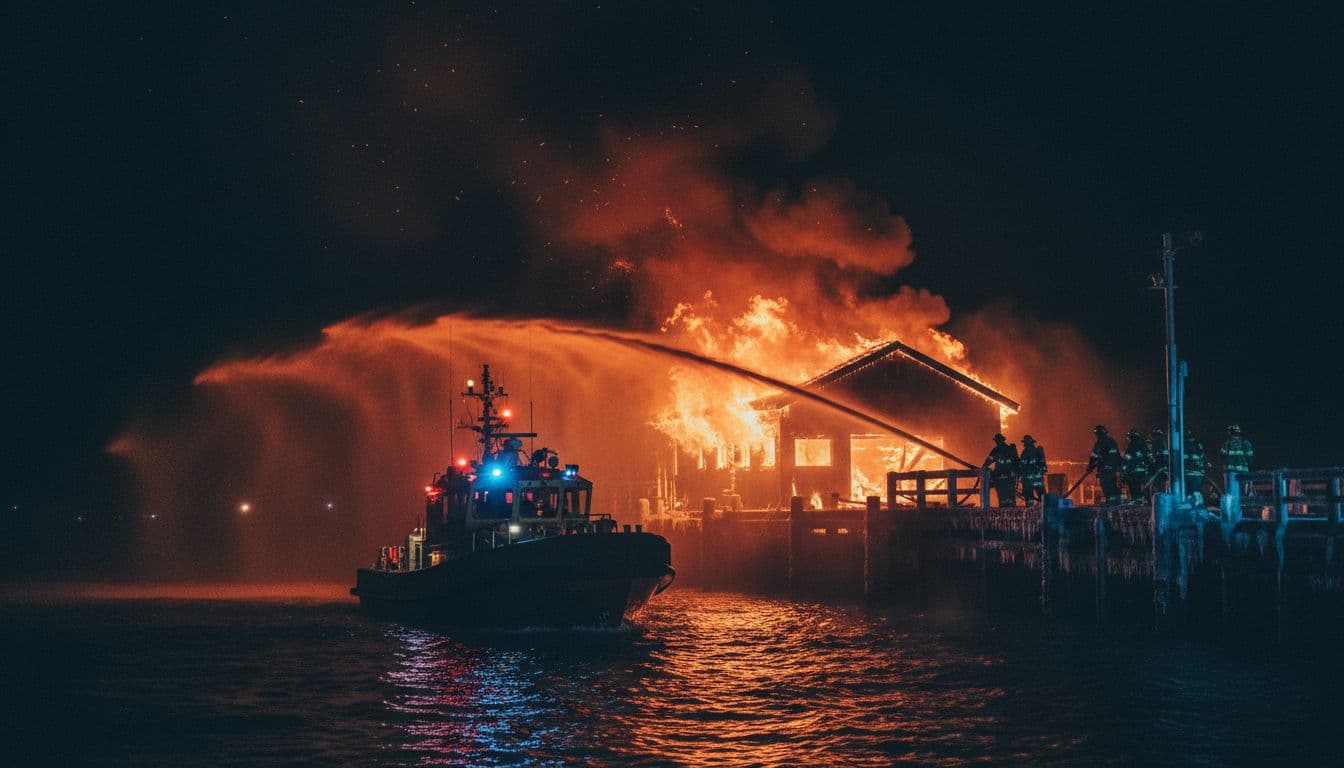
Cold weather added to the challenge. Officials noted that firefighters ran into problems on land, including frozen fire hydrants in frigid temperatures. To keep water flowing, crews also used resources on the water, including boats, to help fight the flames from multiple angles.
Impact on Nearby Properties and Boats
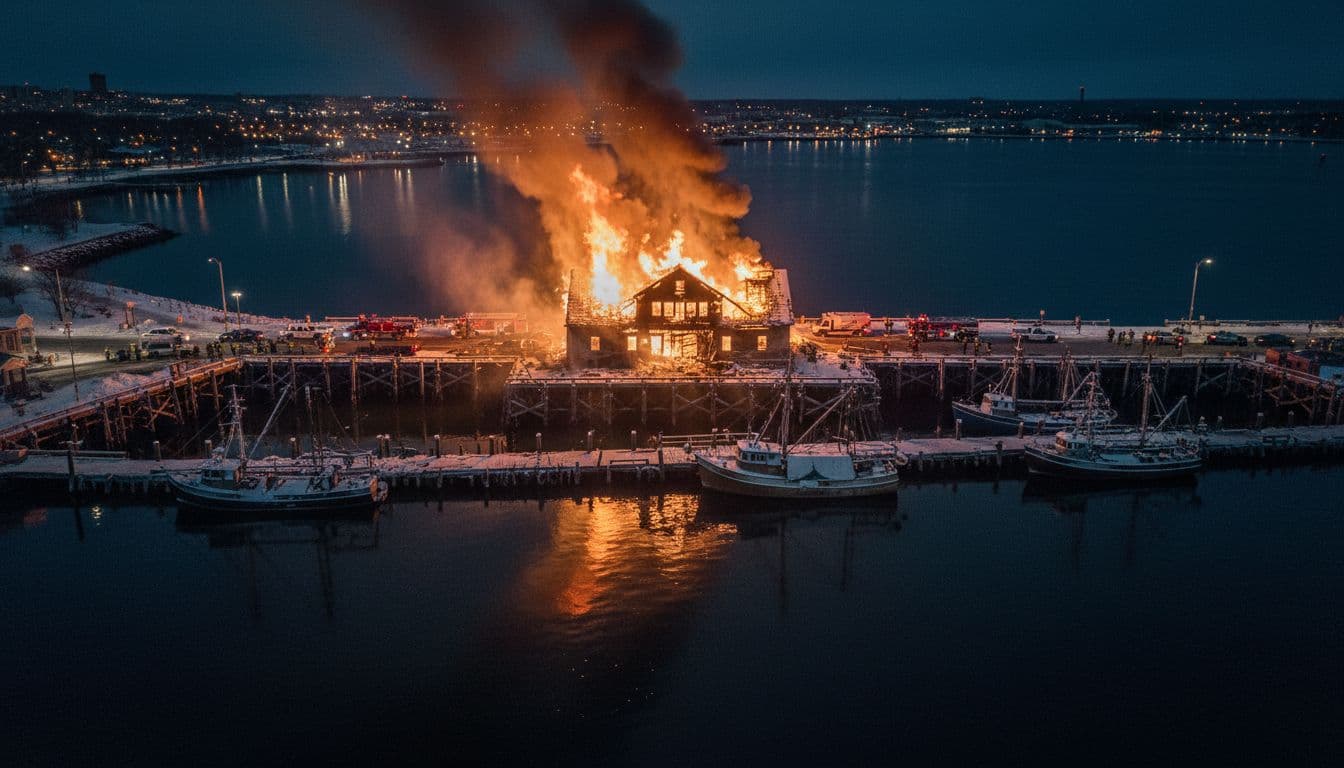
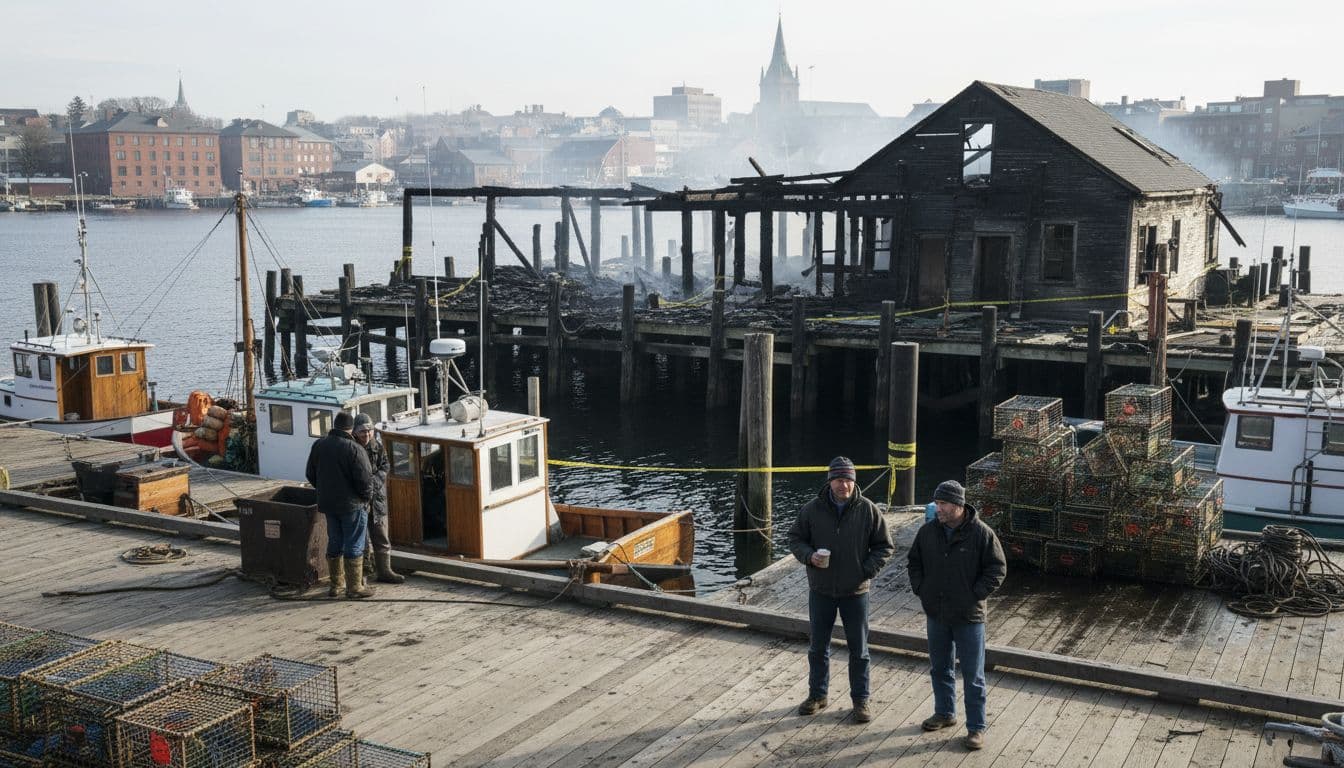
In addition to the destroyed building, nearby properties sustained damage as the fire burned through part of the wharf. The waterfront location also raised immediate concerns for the many working boats that use the area.
Local lobstermen rushed to the scene to check on their vessels. Officials confirmed that at least one boat sank and others were damaged.
For people who work on the waterfront, the danger is not only the fire itself. Smoke, falling debris, and icy surfaces can turn the area around a blaze into a hazardous zone. With narrow access points and busy foot traffic common in the Old Port, emergency crews also have to manage space and movement while protecting the public.
Witnesses Describe a Sudden, Explosive Moment
Witnesses described the situation as fast-moving. Hillary Robbins, an employee at Andy’s Old Port Pub, said she and others heard a loud sound before seeing smoke.
“We heard a loud bang, explosion like, and we walked outside to see what was going on and we looked down the wharf and saw smoke coming out of the very last building on the wharf,” Robbins said.
That kind of sudden start can be alarming for anyone nearby, especially in a dense area where buildings, restaurants, and waterfront businesses sit close together. Fire officials have not released a cause, and investigators will work to determine how the blaze began and what conditions may have contributed to its rapid spread.
Community Spirit on the Waterfront
While the fire caused major damage, it also revealed a strong sense of community along the working waterfront. Ayla Coyne described the Old Port as a place where people look out for one another, especially during a crisis.
“We’re a big community down here, everybody, it’s family down here. The Old Port is family, everybody helps out when they can help out, no matter where they are or what they’re going through, everybody lends a helping hand,” Coyne said.
That sense of “family” is often strongest in places like Custom House Wharf, where work and daily routines are tied to the water. When an incident affects boats and buildings at once, it can disrupt livelihoods, not just property.
Caution Advised: What to Know If You’re Heading to the Old Port
Even after a fire is brought under control, the area can remain active with responders, investigators, utility crews, and cleanup teams. If you plan to visit the Old Port or waterfront, consider these practical safety steps:
- Avoid the immediate area around Custom House Wharf if you can. Give crews room to work.
- Expect detours and slower traffic near Commercial Street.
- Watch for ice, especially near the water where spray and runoff can freeze quickly.
- Do not cross barriers or caution tape, even if the scene looks quiet.
- Limit close viewing. Smoke and soot can linger, and debris can still fall.
If you live or work nearby and notice smoke odors indoors, it can help to close windows and run a clean HVAC filter until conditions improve. Always follow guidance from local officials if advisories are issued.
Investigation Underway
The State Fire Marshal’s Office will investigate the fire, including how it started. In waterfront fires, investigators may also examine factors like building materials, power sources, heating equipment, and environmental conditions such as wind and temperature.
For now, many questions remain, including what sparked the initial flames and how quickly the fire spread through the structure. Officials have not announced an estimated timeline for the investigation.
Why Waterfront Fires Can Be So Hard to Fight
Fires on wharves and piers create unique obstacles. Access can be limited by narrow walkways, parked vehicles, and tight building spacing. Water supply can also be complicated in extreme cold, as hydrants and equipment may freeze. At the same time, strong winds off the water can push flames and embers, increasing the risk of spread.
In this case, officials said crews had to adapt quickly, using boats to help attack the fire while managing the limits of land-based water supply. Their main priority was containment, keeping the blaze from running down the line of buildings on the wharf.
Source and Updates
This report is based on details published by WGME. The situation was described as a developing story, and additional updates may be released as investigators learn more.
If you have photos or firsthand information and it is safe to share, consider providing them to local news outlets or officials. Most importantly, avoid the active scene and follow public safety direction while crews continue their work.
To contact us click Here .