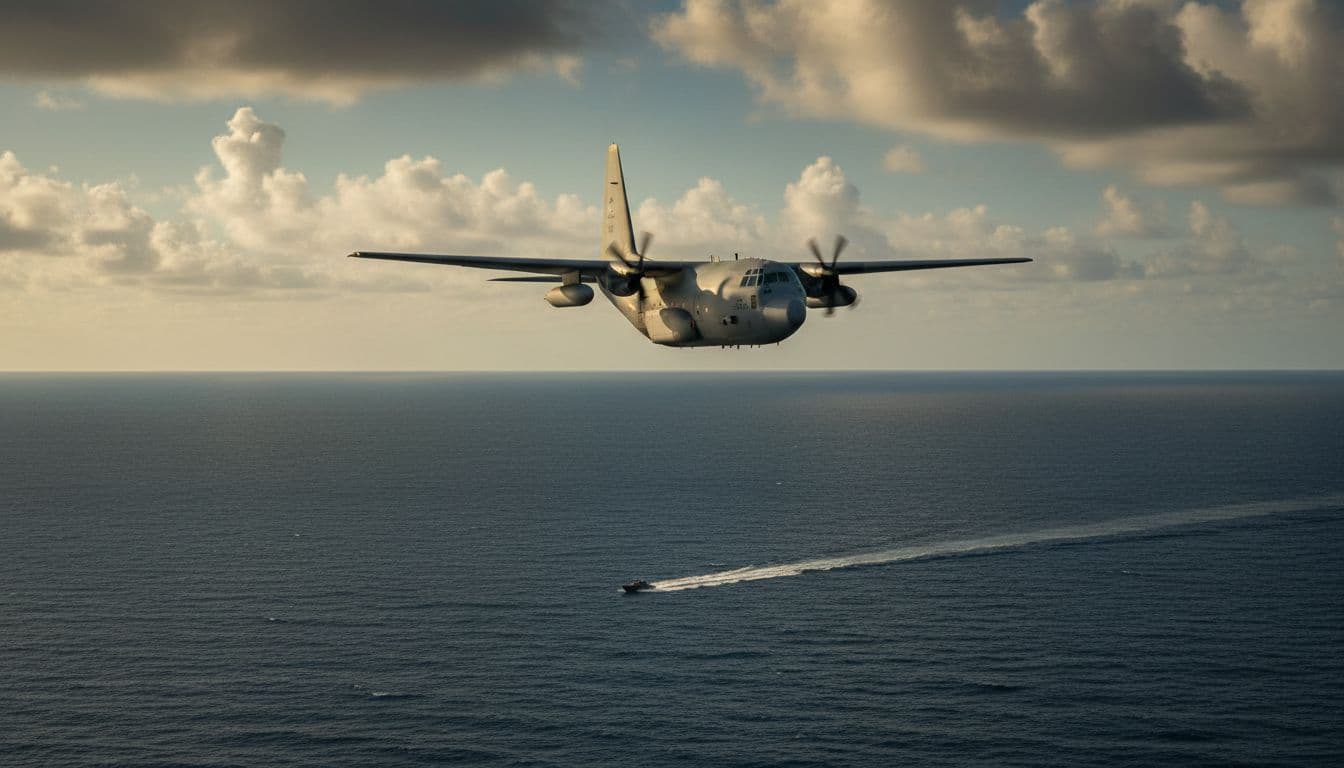
A new report has raised fresh legal and ethical questions about the United States’ boat-strike campaign in the southern Caribbean, after allegations that a US military aircraft was made to look like a civilian plane during an attack on a suspected drug-smuggling vessel linked to Venezuela.
According to Al Jazeera, summarizing reporting from The New York Times, the incident could implicate rules of armed conflict that forbid certain forms of deception. The White House had no immediate reaction following publication of the report, Al Jazeera said.
It is important to note that these are allegations based on media reporting. Key details, including who ordered any alleged disguise and what exact aircraft configuration was used, were not publicly confirmed in the Al Jazeera report.
What the Report Alleges
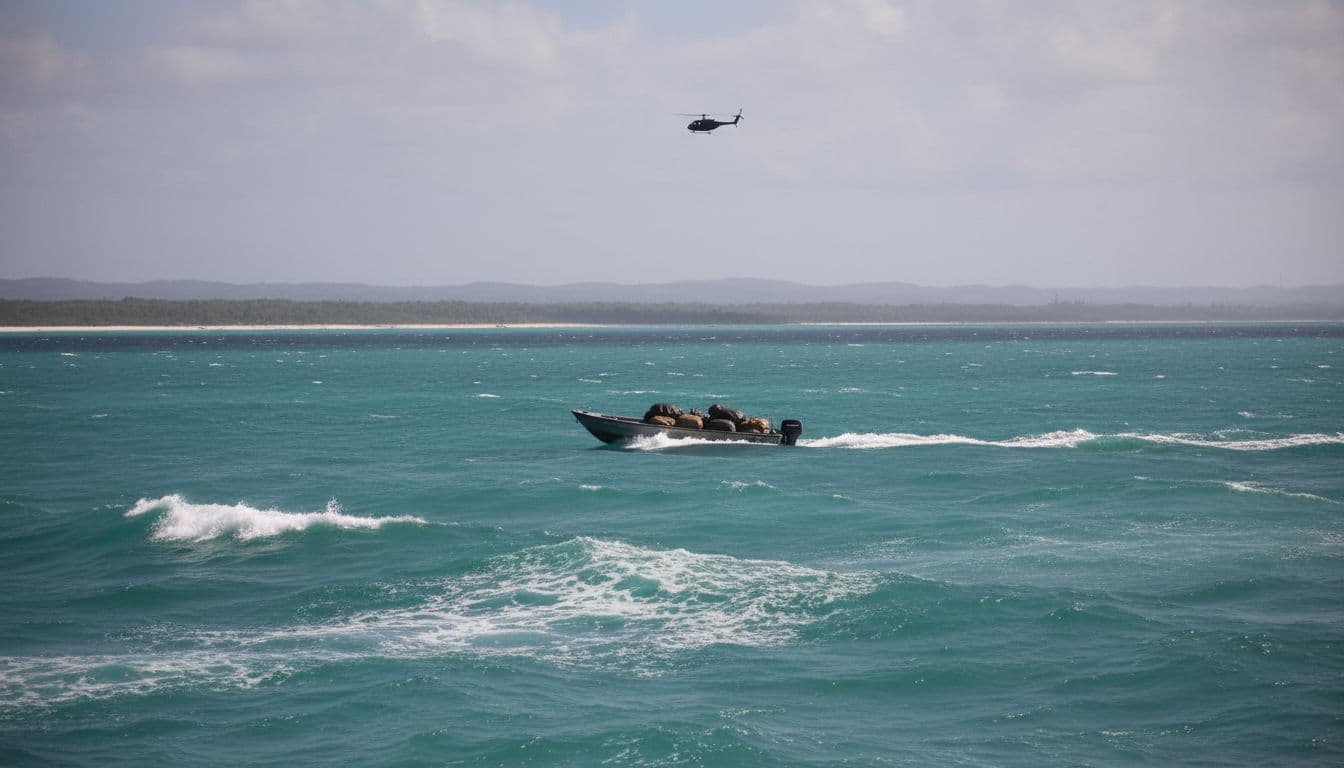
The allegation centers on the first publicly known strike in a boat-bombing campaign launched by President Donald Trump on September 2 in the southern Caribbean Sea. At the time, Trump said on Truth Social that the initial attack killed 11 people whom he described as “narcoterrorists,” according to Al Jazeera.
The New York Times report, as described by Al Jazeera, suggests the aircraft used in the operation was painted in a way that made it resemble a civilian plane, with missiles “tucked away in the fuselage” rather than carried visibly under the wings. If accurate, that detail matters because it could affect how the aircraft is identified by people on the ground or at sea.
Al Jazeera also reported that sources told the Times the aircraft was painted in “the usual military grey” and lacked military markings, while its transponder transmitted a military tail number. The reporting did not identify who ordered the aircraft to be presented in this way.
Why “Disguise” Matters Under the Laws of War
The controversy is not simply about tactics. It is about whether the reported conduct crosses a legal line. The Al Jazeera report says the New York Times raised the possibility that the conduct could be considered a war crime under the laws governing armed conflict.
Al Jazeera quoted Major General Steven Lepper, a retired deputy judge advocate general for the US Air Force, who said concealment of military insignia and weaponry could be an act of “perfidy,” a deceptive tactic that is forbidden under international law.
“Shielding your identity is an element of perfidy,” Lepper told the Times, according to Al Jazeera. “If the aircraft flying above is not identifiable as a combatant aircraft, it should not be engaged in combatant activity.”
In plain terms, the allegation is not that the US used deception in general. Many types of deception are permitted in conflict. The concern is about deception that makes a combatant look like a protected civilian, which can undermine the protections that civilians and civilian objects are supposed to have.
The Broader Context: The Boat-Bombing Campaign
The reported aircraft “disguise” allegation arrives amid a broader debate about the Trump administration’s boat-bombing campaign. The administration has argued the attacks are needed to stop illicit drugs from reaching US shores from South America, Al Jazeera reported.
A major point of contention is how the US government is framing the situation. Al Jazeera reported that Trump indicated in a memo to Congress that he considers the US to be in a “non-international armed conflict” with drug cartels, describing them as unlawful combatants.
However, the Al Jazeera report notes there is “no legal basis” for such a determination and that drug trafficking is generally treated as a criminal offense, not the equivalent of an armed attack. Human rights experts, including at the United Nations, have characterized the strikes as extrajudicial killing and a violation of international law, Al Jazeera reported.
Prior Reporting Raised “Double-Tap” Questions
The September 2 strike has been the subject of earlier scrutiny as well. Al Jazeera reported that a 29-second video accompanied Trump’s announcement, showing a boat engulfed in a single blast.
But in December, The Washington Post reported the attack was instead a “double tap,” with US Navy Admiral Frank Bradley allegedly authorizing a second missile blast to kill two previously unreported survivors, according to Al Jazeera.
That earlier reporting raised war-crime concerns too, Al Jazeera said, because it is considered illegal to attack shipwrecked adversaries even in wartime. The newer New York Times reporting adds another layer of questions about how the operation was conducted and what options, if any, people on the boat might have had after the first strike.
Venezuela Angle and Rising US-Venezuela Tensions
The strike is also tied to escalating US-Venezuela tensions. Al Jazeera reported that Trump accused those targeted in the September 2 attack of being members of the Tren de Aragua criminal organization “operating under the control” of Venezuela’s then-President Nicolas Maduro.
Al Jazeera also reported that the US military earlier this month abducted Maduro and brought him to New York to face criminal charges related to drug trafficking. That development, combined with repeated strikes at sea, has fueled international attention and concern about how far the conflict narrative is being stretched to justify lethal force.
What We Still Don’t Know
Several key questions remain unanswered based on the information in the Al Jazeera report:
- Who authorized any alleged removal or concealment of military markings.
- What the aircraft looked like in practice, including what markings were absent and what identifiers were still active.
- What warnings or verification steps were taken before firing, and what intelligence supported the targeting.
- Whether an independent investigation will review the operation and publish findings.
Why This Story Matters
The debate is not only about one strike. It is about the rules that separate policing from war, and the standards that states must meet when they use lethal force across borders. If a government claims it is in an armed conflict, that claim can carry sweeping consequences, including expanded targeting authorities. If that claim is weak or disputed, every operational decision faces heavier scrutiny.
For critics, the alleged “disguise” raises the fear that protections meant for civilians are being blurred. For supporters of the campaign, the focus remains on stopping drug trafficking. The next steps, including any official response, release of additional footage, or congressional oversight, may determine whether these allegations become a formal legal controversy or remain a media-driven dispute.
To contact us click Here .