

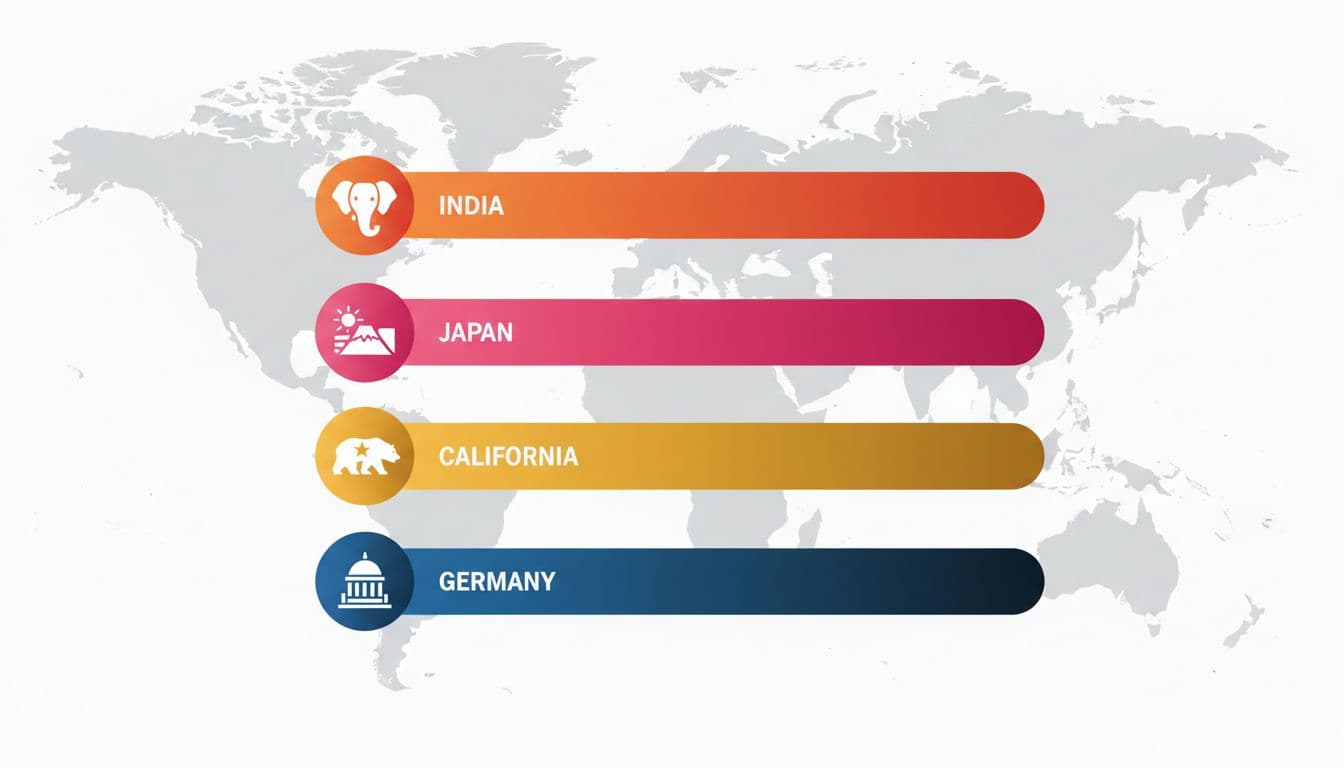
India is on the brink of a major milestone: becoming the world’s fourth-largest economy. A recent report highlighted that India’s gross domestic product (GDP) has reached about $4.18 trillion, which would place it just ahead of Japan, and also ahead of California if California were counted like a stand-alone economy.
Some global scorekeepers, including large international institutions, may still show India in fifth place for now. But the direction is clear. With India growing far faster than Japan, the ranking shift looks less like a prediction and more like a timetable.
Note: This article is an original write-up based on publicly reported figures and commentary, including a MarketWatch report published Dec. 30, 2025.
1) The GDP Numbers: Why This Ranking Shift Is Happening
GDP rankings can change for a few reasons, but the big driver here is simple: growth rates. India’s economy has posted strong expansion in 2025, including a reported 8.2% GDP growth rate in one recent quarter. When one large economy grows quickly and another grows slowly, the gap closes fast.
Japan, by comparison, is expected to grow at a much slower pace (around the low single digits in many forecasts). That difference matters a lot when you are comparing multi-trillion-dollar economies.
There is also the question of how and when the rankings are updated. Some organizations update tables on set schedules and may use different time windows. That can create a short delay between what national data suggests and what global rankings show.
2) California vs. Countries: A Useful Comparison (With Limits)
Comparing India to California grabs attention because it reframes scale. California is massive, with an economy larger than many countries. If it were a nation, it would sit near the top of global GDP rankings.
Still, it is important to treat the comparison as context, not a perfect match. Countries control monetary policy, trade strategy, and national budgets. States do not. Even so, the comparison helps show just how large India’s economy has become.
3) Why India’s Stock Market Has Not Matched the GDP Story
Here is a surprising twist: economic growth and stock market returns do not always move together.
In 2025, India’s benchmark stock index has been up roughly 10% (as reported), which is decent but not spectacular. Over the same period, the broader MSCI Emerging Markets index has been up much more. Some India-focused funds listed in the U.S. have shown even smaller gains.
So what explains the gap?
High expectations and pricey valuations
Indian equities have often traded at a premium compared to other emerging markets. When valuations are already high, it can be harder for prices to rise quickly, even when the economy is doing well. Investors may feel that “good news” is already priced in.
Sector trends and global investor rotation
Markets move in cycles. In 2025, investor attention has tilted toward certain tech themes and cheaper markets. When global money rotates elsewhere, India can lag even with strong fundamentals.
Geopolitics and trade friction
Trade disputes and international tensions can affect investor sentiment. Even if the domestic economy is steady, foreign flows can slow when headlines add uncertainty.
4) The “Goldilocks” Question: Can Growth Stay High While Inflation Stays Low?
One reason analysts are paying close attention is the claim that India may be in a “just right” moment: fast growth without runaway inflation. If inflation stays under control, the central bank may have more flexibility. Rate cuts become possible, which can support borrowing, business investment, and consumer spending.
That said, maintaining this balance is difficult. Energy prices, food costs, and global shocks can all change the picture quickly. The big question is not whether India can grow. It is whether India can sustain rapid growth while also building enough infrastructure, jobs, and productivity to keep living standards rising.
5) What’s Next: Germany in the Crosshairs
If India becomes No. 4, the next target is No. 3. That spot is currently held by Germany, with an economy around the $5 trillion mark (depending on the measure and the year).
Based on current trajectories and official commentary, India could potentially pass Germany within the next few years. That would be a major shift in the global economic map. It would also increase India’s influence in trade negotiations, capital markets, and multilateral institutions.

6) The Long Gap Still Ahead: The U.S. and China
Even with a move into fourth place, India would still trail the top two economies by a wide margin. The United States sits around $30 trillion, and China around $19 trillion (figures vary by source and timing).
That gap matters, but it does not erase the milestone. Climbing from fifth to fourth is not just symbolic. It reflects decades of compounding growth and a larger role in global demand.
7) What This Means for Creators, Entrepreneurs, and Investors
This shift is not only a macro headline. It can shape real opportunities:
- More global attention: Brands, media, and investors pay closer attention as India climbs the rankings.
- More competition: When attention rises, so does competition. New entrants rush in, and standards rise.
- New consumer markets: As incomes grow, demand expands across finance, education, health, travel, and digital products.
- Long-term story, short-term noise: GDP trends can be strong while stocks stay flat for a period. Both can be true.

India’s rise toward the No. 4 spot is a milestone built on sustained growth and expanding economic scale. It also comes with nuance: GDP rankings can shift before global tables are updated, stock returns can lag even when the economy surges, and the next phase depends on keeping inflation controlled while improving productivity and jobs.
If current trends hold, India will not just pass Japan. It will start putting real pressure on Germany’s position, too. For readers watching global markets, business, and innovation, India is no longer an “emerging” side story. It is becoming one of the main chapters.
To contact us click Here .