

NASA engineers are working to restore contact with the MAVEN spacecraft, a long-running Mars mission that has helped scientists understand how the Red Planet lost most of its atmosphere. On December 6, 2025, MAVEN went behind Mars as part of its normal orbit. Before it slipped out of view, the spacecraft’s systems looked healthy and stable.
When MAVEN came back into view, however, NASA’s Deep Space Network (DSN) could not detect a signal. Since then, mission teams have been studying the problem and working through many possible causes. While details are still limited, this event highlights how complex and fragile deep space operations can be, even for a spacecraft that has orbited Mars for more than a decade.
What Happened To MAVEN?
MAVEN, which stands for Mars Atmosphere and Volatile EvolutioN, follows an orbit that regularly takes it behind Mars from Earth’s point of view. During these periods, contact with the spacecraft is temporarily lost, then returns once MAVEN moves back into line of sight with Earth-based antennas.
On December 6, everything appeared normal before this routine blackout. Telemetry from MAVEN suggested that all subsystems were working properly. Power, communications, and attitude control looked as expected. The spacecraft entered the communications blackout, just as it has many times since arriving at Mars in 2014.
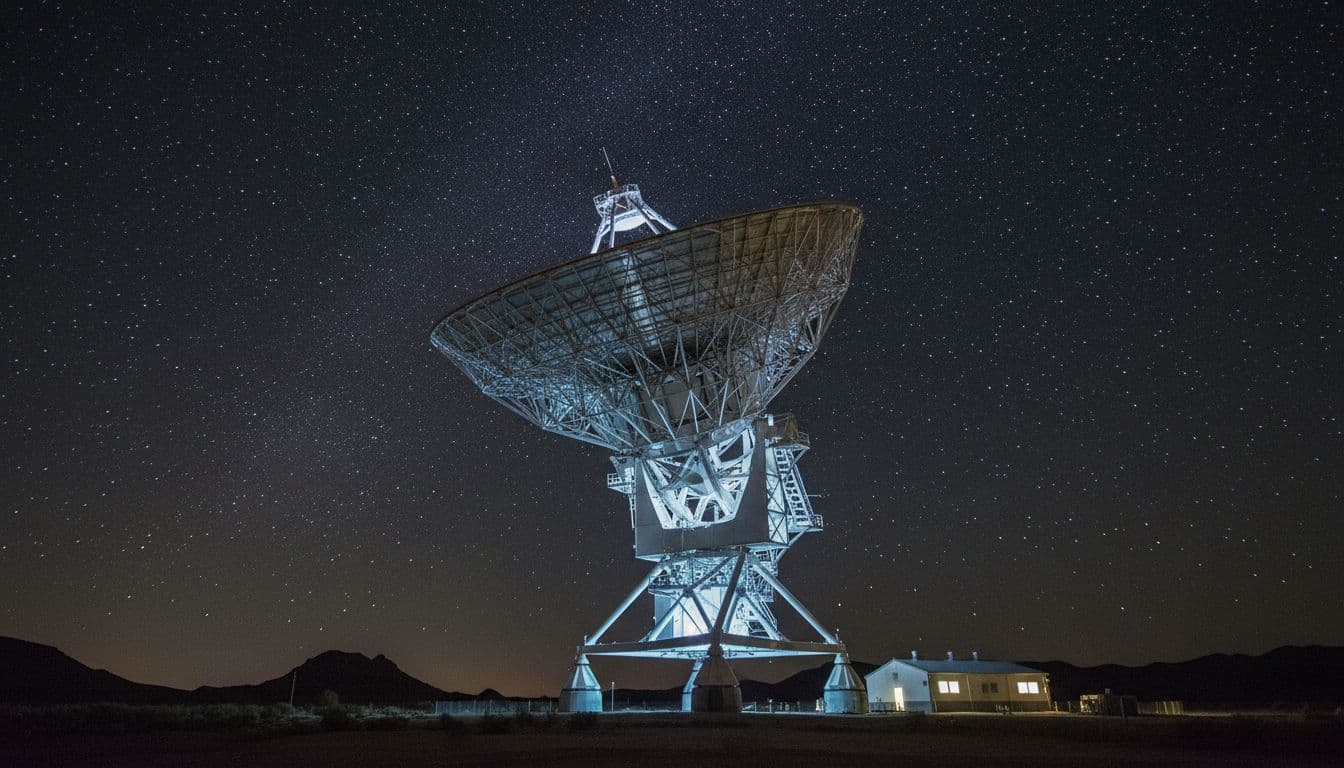
Once MAVEN reappeared from behind Mars, NASA’s Deep Space Network pointed its huge radio antennas toward the spacecraft’s predicted location. This time, however, no signal came back. The silence suggested either a problem with MAVEN’s communications system or an issue that affected the spacecraft more broadly.
How NASA Responds To A Signal Loss
When a spacecraft goes silent, engineers follow a strict and careful process. The first step is to confirm that the problem is not on Earth. Teams check the DSN antennas, receivers, software, and tracking information. If all ground systems look healthy, attention shifts fully to the spacecraft.
Next, mission teams review the last good data sent by MAVEN before it went behind Mars. They look for any signs of rising temperatures, power issues, computer errors, or attitude changes. Since the last telemetry from MAVEN showed normal behavior, engineers may focus on events that could have occurred during or after the blackout, such as:
- A problem with MAVEN’s onboard computer or software
- A fault in the radio system or high-gain antenna
- An issue with power, batteries, or solar panels
- A safe mode event that changed the way MAVEN points or communicates
Engineers can also send a variety of “blind” commands. These are signals sent toward the spacecraft without waiting for a reply. The goal is to trigger backup modes, switch antennas, reboot systems, or reset software. If MAVEN is still alive and able to receive, one of these commands may bring it back into contact.
Why MAVEN Matters For Mars Science
MAVEN launched in November 2013 and entered Mars orbit in September 2014. Its main goal is to study the upper atmosphere of Mars and how it interacts with the solar wind. Over time, this interaction can strip away gas from a planet’s atmosphere and send it into space.
Mars once had a thicker atmosphere and could support liquid water on its surface. Today, it is cold and dry, with a thin, mostly carbon dioxide atmosphere. By measuring how fast Mars is losing gases like oxygen and carbon dioxide, MAVEN helps scientists piece together how the planet’s climate changed over billions of years.

MAVEN studies:
- The structure and composition of the upper atmosphere
- The ionosphere, where charged particles interact with solar radiation
- The rate at which gas escapes from Mars into space
- How solar storms and changes in the solar wind affect atmospheric loss
These measurements do more than tell us about Mars. They help scientists compare our neighbor with Earth and other planets. By understanding why Mars changed so much, we learn more about what makes a planet habitable in the first place.
MAVEN’s Role As A Communications Relay
MAVEN is not only a science mission. It also acts as a communications relay for rovers and landers on the Martian surface. Relays in orbit can pass data back to Earth more efficiently than small antennas on the ground.
Signals from rovers are beamed up to orbiters like MAVEN, then forwarded to Earth through the Deep Space Network. This setup allows surface missions to send more images, measurements, and other data without using too much power.

If MAVEN remains offline, other Mars orbiters can still provide relay support. However, each spacecraft has its own orbit, capacity, and schedule. Losing any long-lived orbiter adds strain to the network and makes mission planning more complex.
A Decade Of Science At Mars
In 2024, MAVEN celebrated ten years in orbit around Mars. Surviving that long in the harsh space environment is a major success on its own. During that time, MAVEN has built a rich dataset that scientists will study for many years.
Long missions like MAVEN are valuable because they show how Mars changes over time. For example, MAVEN has witnessed how space weather cycles, solar storms, and seasonal changes at Mars affect the atmosphere and ionosphere. These long-term records are hard to replace, which is why NASA works so carefully to keep such missions operating.
What Happens Next?
As of now, NASA teams continue to investigate the signal loss and search for signs of MAVEN. Any updates will likely come from official NASA channels as engineers learn more about the health of the spacecraft and the status of its systems.
Deep space missions are always a balance of risk and reward. MAVEN has already far outlived its original primary mission and has delivered a decade of discoveries. The current situation is a reminder that exploration is never guaranteed, even for experienced teams and veteran spacecraft.
Whatever the outcome, MAVEN’s work has already reshaped our view of Mars. It has shown how the planet’s atmosphere escapes to space, how the solar wind sculpts the upper layers of the Martian sky, and how a once more Earth-like world became the dry, cold planet we see today. That legacy will remain, in the data archives and in future missions that build on MAVEN’s trailblazing path around the Red Planet.
To contact us click Here .