
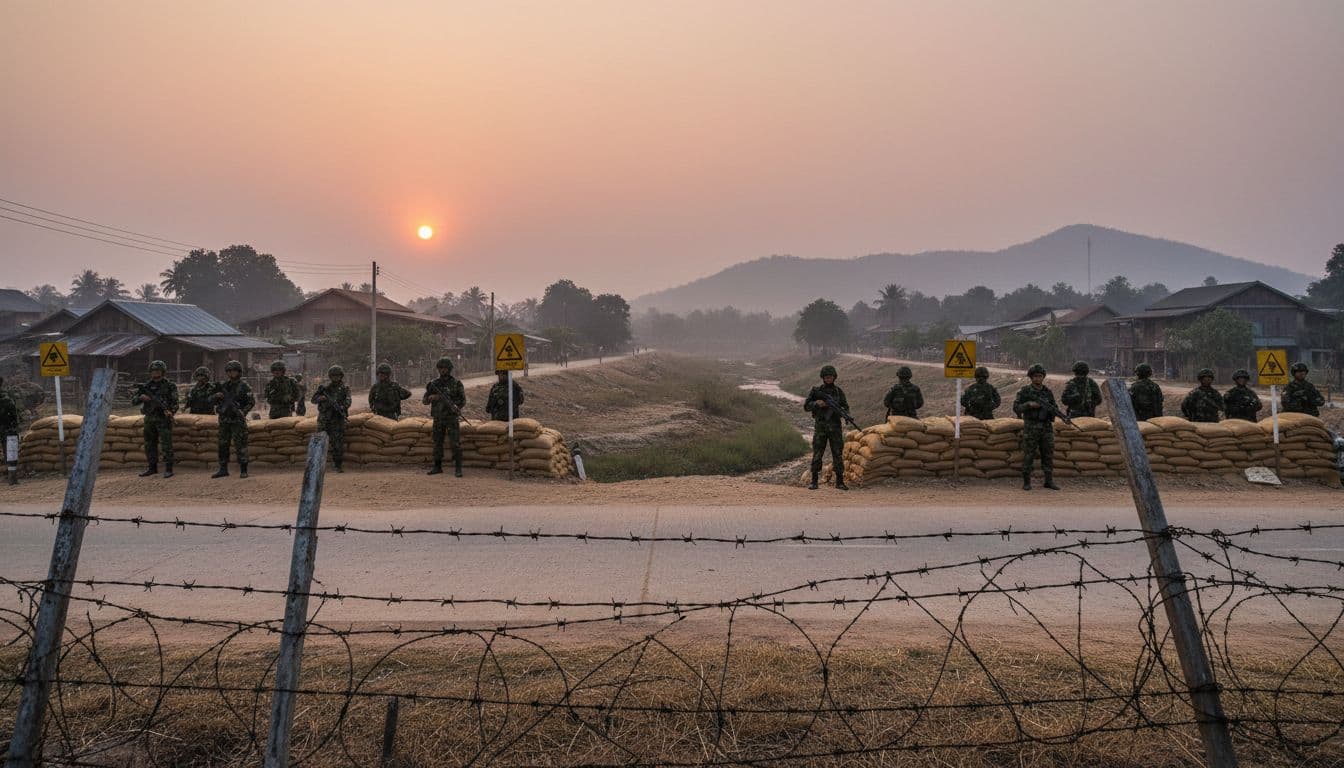
Fighting has broken out again along the border between Thailand and Cambodia. New airstrikes, artillery fire, and forced evacuations have raised fears of a wider conflict. The violence also puts a recent peace agreement, promoted by former US President Donald Trump, at serious risk.
In this article, we will look at what is happening, why the border is disputed, how the new fighting began, and what it could mean for peace in Southeast Asia.
Fresh Fighting Along A Long-Disputed Border
On Monday, Thailand launched airstrikes against targets inside Cambodia. Thai officials said they were aiming at Cambodian military positions near the Chong An Ma Pass. They described the operation as a direct response to earlier attacks they say came from the Cambodian side.
According to the Thai army, Cambodian forces used artillery and mortar fire against a Thai base known as Anupong Base. They claim one Thai soldier was killed and at least seven others were injured. Thailand also said Cambodia had moved heavy weapons and combat units closer to the border in recent days.
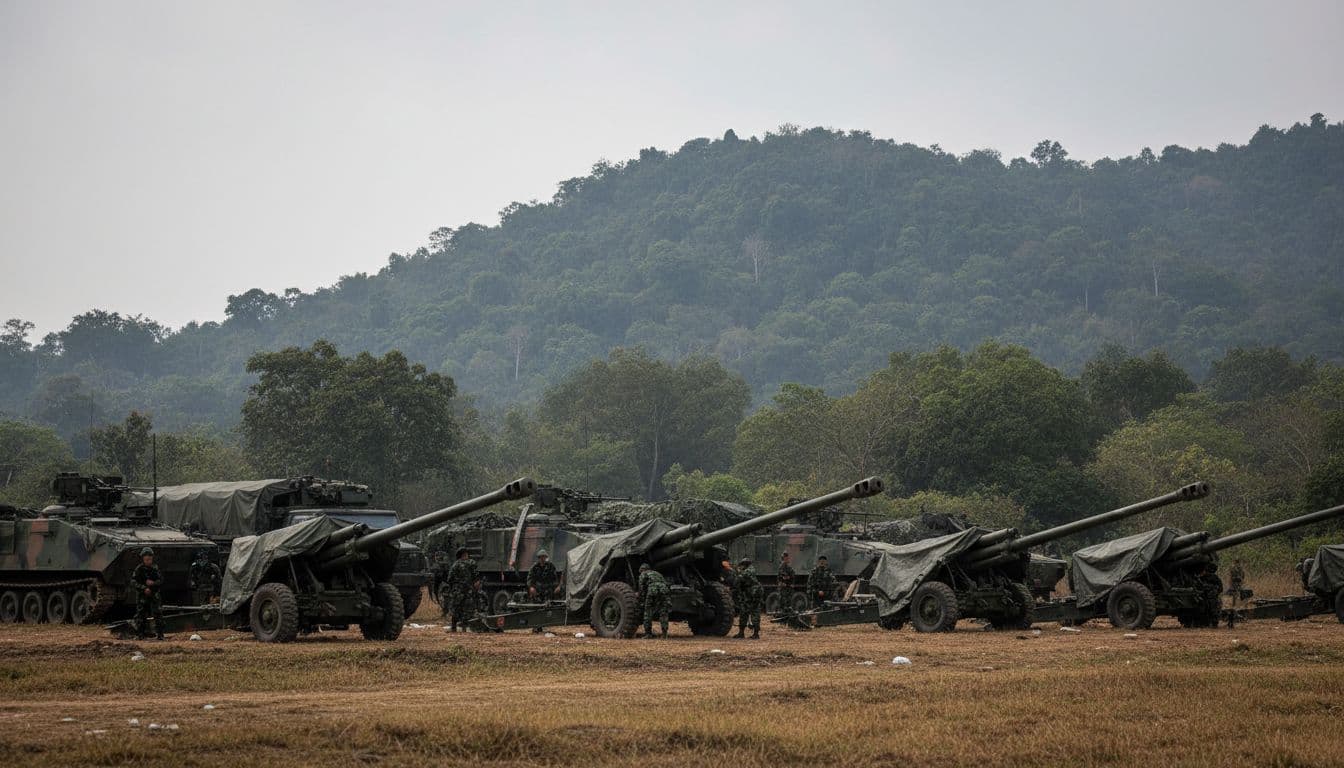
Cambodian officials strongly deny these claims. Cambodia’s Ministry of National Defense called the Thai accusations “false information” and said their forces did not start the clash. Instead, they say Thailand launched an attack against Cambodian troops around 5:04 a.m. local time.
Cambodian spokespersons also accused Thailand of provoking clashes for several days, burning homes in nearby villages, and forcing people to flee. At least four Cambodian civilians were reported killed, with several more injured in the northern provinces of Oddar Meanchey and Preah Vihear.
Evacuations And Human Cost
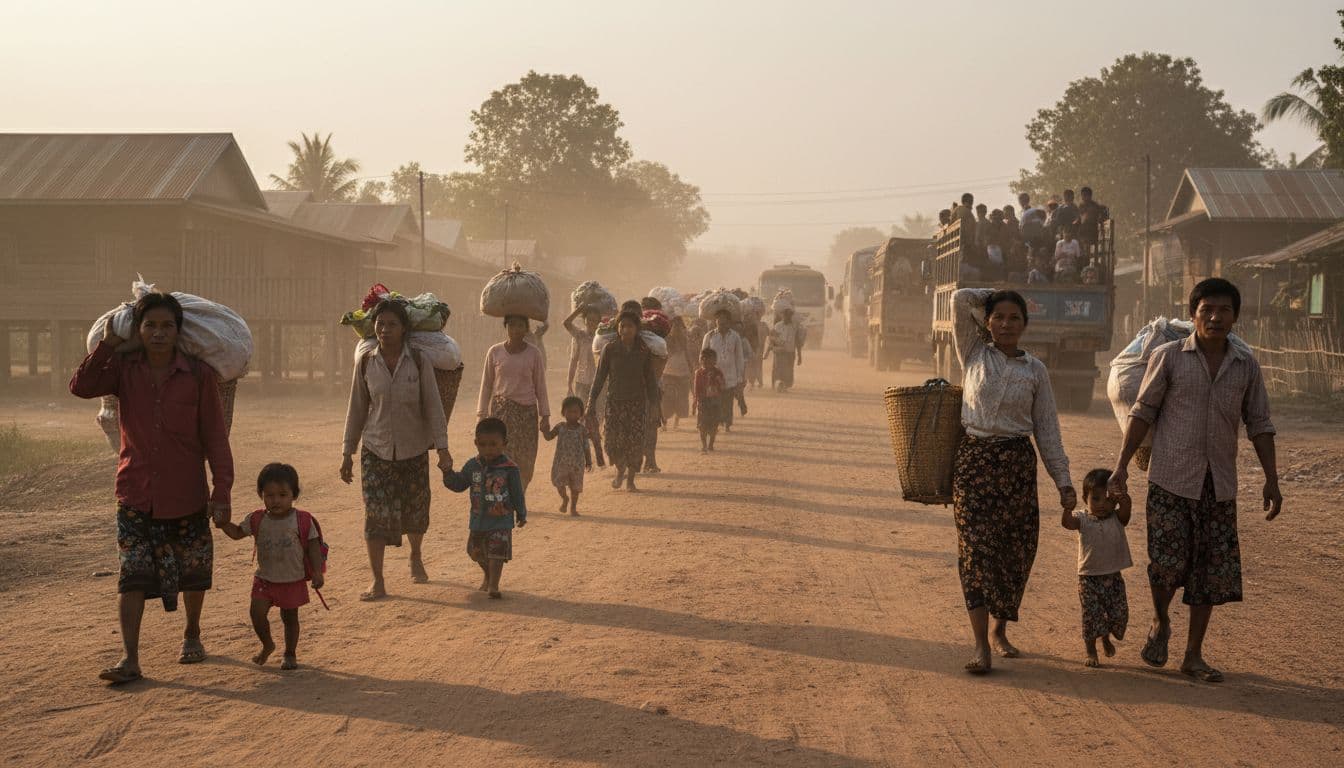
The latest clashes are not only military events. They are also a humanitarian problem for people who live near the border. Thailand began evacuating civilians from affected towns on Sunday, before the airstrikes. By Monday, Thai officials said around 70% of residents in some border communities had already been moved to safer areas.
On the Cambodian side, reports from officials describe families leaving homes behind in a hurry. Some villages have been hit by shelling and fires. The fear of more airstrikes and artillery attacks makes it hard for people to know when it will be safe to return.
Both countries insist they do not want a larger war. Thai Prime Minister Anutin Charnvirakul said Thailand “never wished to see violence” but warned that his country would not allow any violation of its sovereignty. Cambodian officials say they remain committed to a ceasefire and accuse Thailand of breaking it.
The Peace Deal That Is Now At Risk
The timing of this new wave of fighting is important. Only a few months ago, Thailand and Cambodia agreed to a ceasefire plan that was promoted by Donald Trump. The agreement was seen as a rare diplomatic win for him and was held up as proof of his ability to end conflicts.
In July, after deadly clashes that lasted five days and displaced around 200,000 people, Trump held calls with both Thai and Cambodian leaders. That led to an initial ceasefire on July 28. Then, in late October, both countries signed a broader ceasefire declaration in Kuala Lumpur. Trump and Malaysian Prime Minister Anwar Ibrahim attended the signing.
At the time, the deal was presented as a major step toward long-term stability along the 500-mile (800-kilometer) border. However, trouble began again within weeks. Thailand later said it was halting progress on the agreement after a landmine explosion injured several Thai soldiers near the border.
Now, with new airstrikes and artillery fire, the peace agreement looks very fragile. If the current clashes spread or drag on, it could effectively kill the ceasefire and undo months of diplomatic work.
Why The Border Is So Disputed
To understand why these clashes keep returning, it helps to know the history behind the border itself. Thailand and Cambodia share a long frontier, but not all of it is clearly agreed on. The disagreement dates back to the colonial period when France controlled Cambodia.
At that time, French officials drew maps that Thailand and Cambodia do not interpret the same way today. Some areas, including regions near important temples and hills, remain disputed. Both sides claim they own certain pieces of land, and both have military forces nearby.

From time to time, small incidents in these areas have led to bigger clashes. There have been several brief but deadly border fights over the past few decades. The area around Preah Vihear temple, for example, has been a source of tension and national pride for both countries.
Because the border is long and often rural, it is also hard to monitor. Landmines left from older conflicts still pose a risk to soldiers and civilians. This mix of unclear lines, old wounds, and national pride makes the situation very sensitive.
Regional Reaction And The Role Of ASEAN
Thailand, Cambodia, and Malaysia are all members of ASEAN, the Association of Southeast Asian Nations. ASEAN often tries to calm tensions between its members and prevent local disputes from growing into larger conflicts.
After reports of the latest clashes, Malaysian Prime Minister Anwar Ibrahim said he was “deeply concerned.” He warned that renewed fighting could undo the careful work spent on stabilizing relations between Thailand and Cambodia. He also urged both sides to show restraint and return to dialogue.
ASEAN tends to prefer quiet diplomacy and closed-door talks instead of public pressure or sanctions. If the conflict continues, we may see more involvement from ASEAN members, either as mediators or as hosts for new peace talks.
What Could Happen Next
For now, both Thailand and Cambodia blame each other for starting the latest round of fighting. Each side also claims it is committed to peace while accusing the other of breaking the rules. That makes it harder to find common ground, yet it also leaves a small opening for talks. Neither side is openly calling for a wider war.
Several things will shape what happens next:
- Military decisions on the ground: If airstrikes, artillery fire, and troop movements keep rising, the conflict could escalate fast.
- Pressure from ASEAN and neighbors: Regional leaders may push both countries back to the negotiating table.
- Public opinion at home: If civilians keep getting hurt or displaced, people in both countries may call for de-escalation.
- The fate of the Trump-backed deal: If the ceasefire fully collapses, future peace efforts may be harder, since trust will be even weaker.
For people living near the border, the priority is basic safety. They need secure shelters, food, and clear information about what is happening. In the longer term, a lasting peace will likely require clear border agreements, fewer troops in sensitive areas, and strong systems to handle small incidents before they grow into major clashes.
The Thailand–Cambodia border clashes show how fragile peace can be in areas with deep historical disputes. Despite a recent ceasefire that leaders celebrated on the global stage, old tensions and new incidents have brought the region back to the edge of serious conflict.
As airstrikes, artillery fire, and evacuations continue, the human cost is already rising. Regional leaders and international partners now face a familiar challenge: How to turn another crisis into a new chance for dialogue instead of another cycle of violence.
To contact us click Here .