

Space fans in California have a great reason to look up tonight. SpaceX is planning to launch a Falcon 9 rocket from Vandenberg Space Force Base to deploy another batch of Starlink internet satellites. If liftoff happens on schedule, people across parts of Santa Barbara, Ventura, and San Luis Obispo counties may be able to watch the bright trail cross the sky.
In this guide, you will learn when the launch is expected, what the mission is about, and where you might get the best views along the Central Coast. You will also see tips on how to watch safely, along with what to expect if the launch gets delayed.
When Is the Next SpaceX Launch From Vandenberg?
According to launch alerts, SpaceX is targeting Sunday, November 23 for liftoff from Vandenberg Space Force Base. The launch window is expected to open at midnight Pacific Time and last for about four hours. That means the rocket could lift off any time between roughly 12:00 a.m. and 4:00 a.m., depending on final conditions and countdown status.
The late-night timing is not random. Mission planners time launches to match the orbit they want the satellites to reach. The Falcon 9 and its Starlink payload must arrive at a very specific spot in space at a precise moment. That is why overnight windows are common for Starlink missions out of Vandenberg.
A Federal Aviation Administration operations advisory suggests a backup opportunity is available the following day if the launch does not go as planned. So if clouds, winds, or technical checks force a scrub, SpaceX may try again on the next night.
Where Is the Launch Taking Place?
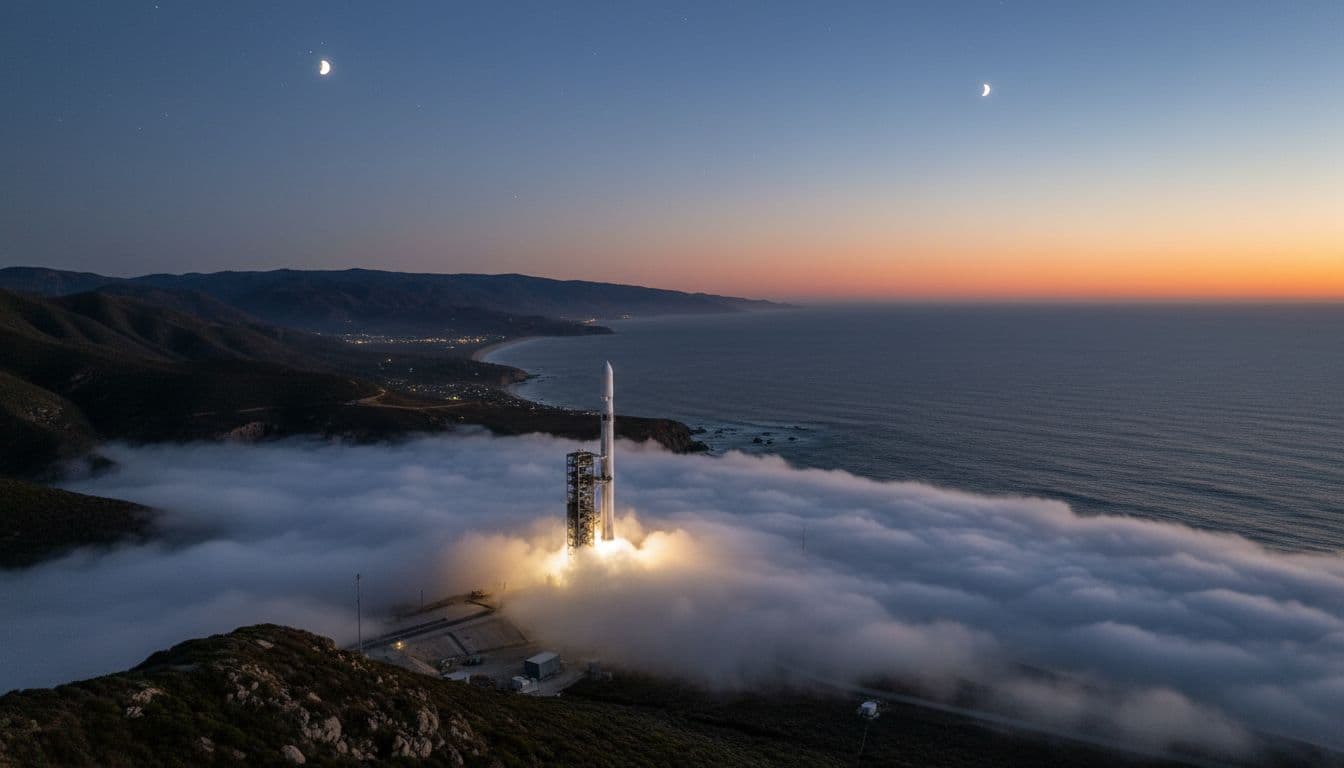
The mission will lift off from Space Launch Complex 4E at Vandenberg Space Force Base in Santa Barbara County, California. This pad has hosted many Falcon 9 launches, including Starlink missions and other science and national security flights.
From this pad, the rocket will follow a southeast trajectory. In simple terms, it will head out over the Pacific Ocean, then curve along a path that helps deliver satellites into their planned orbit. People in the right locations may see the rocket climbing away from the horizon, followed by a streak from the bright exhaust plume.
What Is This SpaceX Mission Doing?
This launch is focused on growing the Starlink internet network. Starlink is a constellation of thousands of small satellites in low Earth orbit, all working together to beam internet service to users on the ground. Each new mission adds another set of satellites, which can improve coverage and capacity.
SpaceX will use its workhorse two-stage Falcon 9 rocket for the job. The first stage carries the vehicle off the pad, then separates and typically returns for a controlled landing, either at sea or on land. The second stage continues into orbit and deploys the Starlink satellites into their target path.
Recently, SpaceX has also been busy with other missions from Vandenberg, including the launch of NASA-designed Sentinel-6B satellites used to track rising sea levels. The company is also preparing a rideshare mission called Transporter-15, which has been delayed from mid-November into Thanksgiving week. With that flight postponed, this Starlink mission is expected to be the next major launch from the base.
How Recent FAA Changes Affect Launches
This mission is also notable because it comes after the Federal Aviation Administration ended a short-term order that had limited the hours for some commercial launches during the recent government shutdown. With that order now lifted, launch operations have returned to more typical scheduling, including overnight windows like this one.
Best Places in California to Watch the Launch
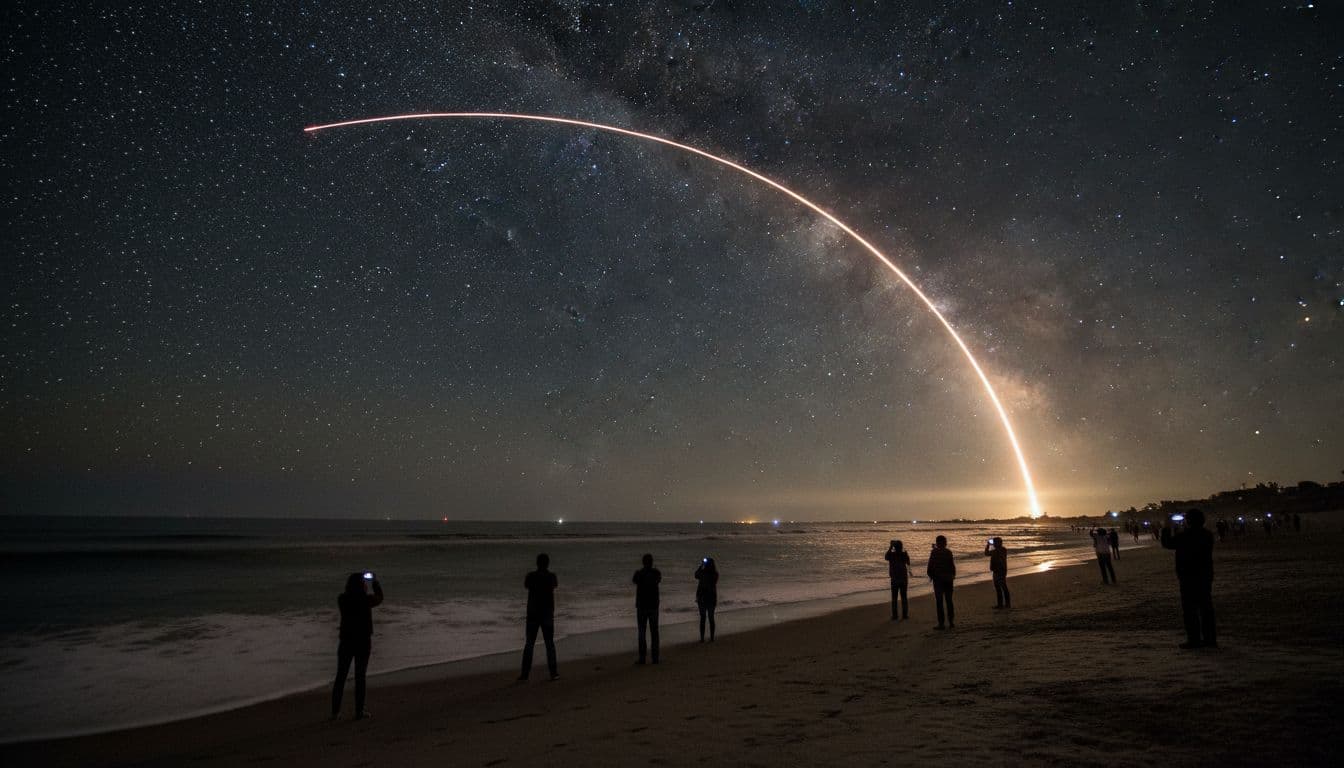
If the sky is clear, people across parts of the Central Coast may have a chance to see the rocket after liftoff. Exact visibility depends on clouds, fog, light pollution, and your view of the horizon, but some regions are often popular with spectators.
Santa Barbara County
- Areas near Lompoc and Vandenberg often provide some of the best direct views, especially from higher ground facing the base.
- Coastal viewpoints, such as public beaches and turnouts in the area, can be good if they offer a clear line of sight to the south or southwest.
Ventura County
- Highway turnouts and coastal parks with dark skies may allow you to see the rocket’s bright trail as it climbs away from the base.
- Hillside neighborhoods with an open view toward the northwest can sometimes catch a glimpse, especially on very clear nights.
San Luis Obispo County
- Bluffs and beaches that face south or southwest may give viewers a wide view of the horizon where the rocket appears.
- Rural locations with low light pollution often offer the best contrast against the night sky.
If you live elsewhere in California, do not rule out the chance of seeing something. People far from the launch site sometimes see the glowing exhaust plume, especially if the rocket climbs into sunlight while the ground is still dark.
Tips for Watching the Launch Safely
If you plan to head out to watch the launch, keep these simple tips in mind:
- Arrive early so you can park legally and safely, especially near popular coastal spots.
- Avoid trespassing on private land or restricted areas near the base.
- Check the weather so you are ready for cool coastal temperatures and possible wind.
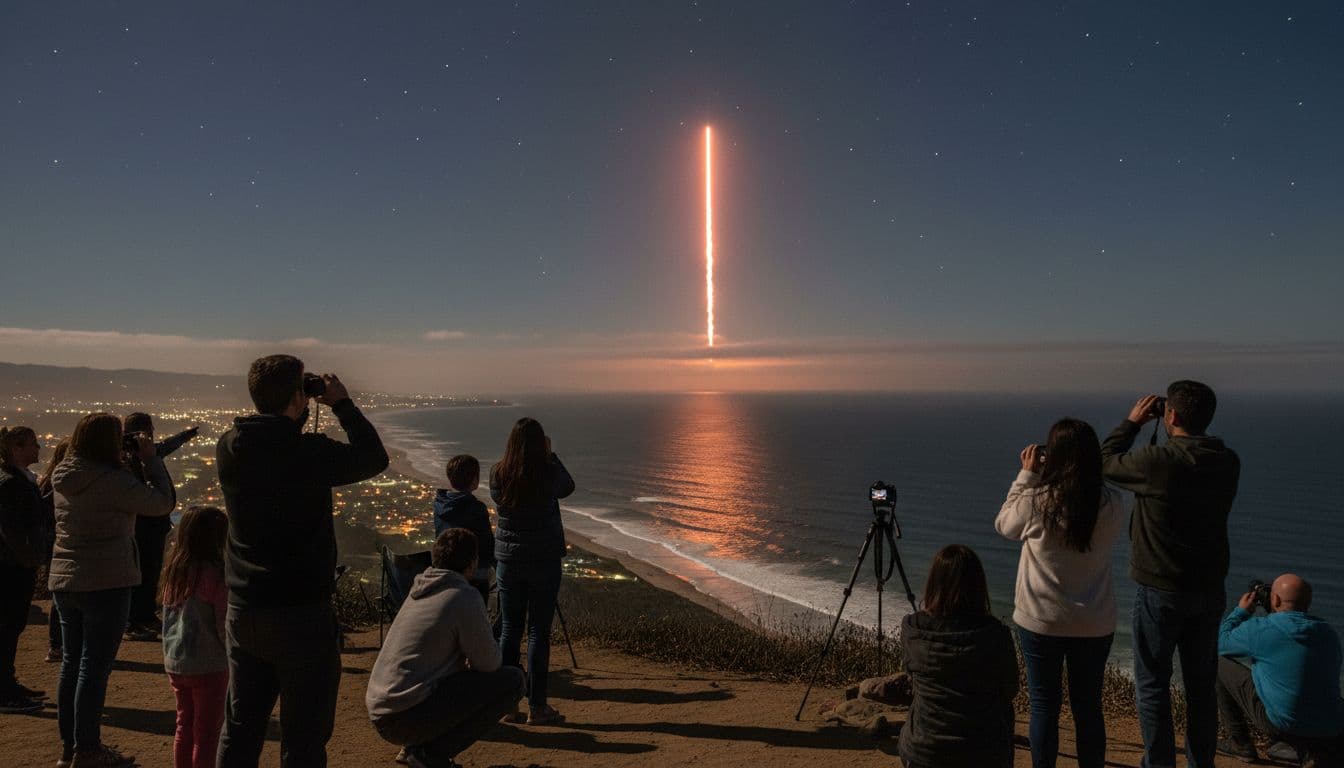
- Bring binoculars or a camera if you want a closer look, though the rocket is often bright enough to see with the naked eye.
- Have a backup plan in case the launch is delayed; overnight windows often shift or slip to the next day.
Why Rocket Launches Are Often Delayed
If you follow launches often, you know that “launch day” does not always mean an actual liftoff. Scrubs and delays are a normal part of spaceflight. Some common reasons include:
- Weather issues, such as heavy winds, thick clouds, or coastal fog.
- Technical checks that show a minor concern with the rocket or ground equipment.
- Range safety concerns that require extra time to clear the area downrange.
Engineers and safety teams are trained to pause a countdown if anything looks off. While that can be frustrating for people who stayed up late to watch, it helps keep crews, hardware, and the public safe. Many launches that scrub on one night fly successfully on a later attempt.
How to Stay Updated on the Launch Status
Launch plans can change quickly, sometimes within hours or minutes of liftoff. To stay current, you can:
- Watch for updates from official SpaceX channels and launch pages.
- Follow Vandenberg Space Force Base social media accounts for local notices.
- Check local news outlets that track California launches for schedule changes.
If you are planning a late-night viewing trip, check these sources right before you leave home, and again when you arrive at your spot. That way you will know if the countdown is still moving or if the team has called a hold.
Tonight’s planned Falcon 9 launch from Vandenberg offers another chance for people across California to see a modern rocket light up the sky. Whether you are a dedicated space fan or just curious about the bright streak you might see overhead, this Starlink mission is a reminder of how often launches now take place along the Central Coast.
If conditions line up and the countdown stays on track, step outside, look toward the horizon, and watch for the bright arc of light climbing into space. Just remember that delays are normal, and there is always another launch on the calendar.
To contact us click Here .