
The AI boom has turned Nvidia into one of the hottest stocks on the market. Its graphics processing units (GPUs) power many of the large language models and AI tools that people talk about every day. But as Google doubles down on its own AI hardware and software, investors are starting to ask a tough question. What happens to Nvidia if big tech companies stop relying so heavily on its chips?
Recent updates from Google suggest that the AI story is getting more complex. The company is pushing its in-house Tensor Processing Units (TPUs), speeding up its AI models, and tying everything into its massive cloud platform. That might be good for Google. It might also mean that the peak of the easy AI trade for Nvidia and others is behind us.
How Nvidia Became the Face of the AI Boom
Nvidia’s rise is tied directly to the explosion of AI demand. Its GPUs are great at running huge numbers of calculations in parallel, which is perfect for training and running AI models. When chatbots and generative AI tools took off, every major company rushed to buy Nvidia chips to keep up.
This turned Nvidia into a star on Wall Street. Revenue soared, margins expanded, and investors priced in years of strong demand. Many traders treated Nvidia as the purest way to bet on the future of AI, especially as other AI stocks struggled to keep up.
But one risk has always been there in the background. What if the biggest buyers of Nvidia’s chips, such as Google, Amazon, and Microsoft, find ways to reduce their dependence on Nvidia? That is where Google’s recent AI moves come in.
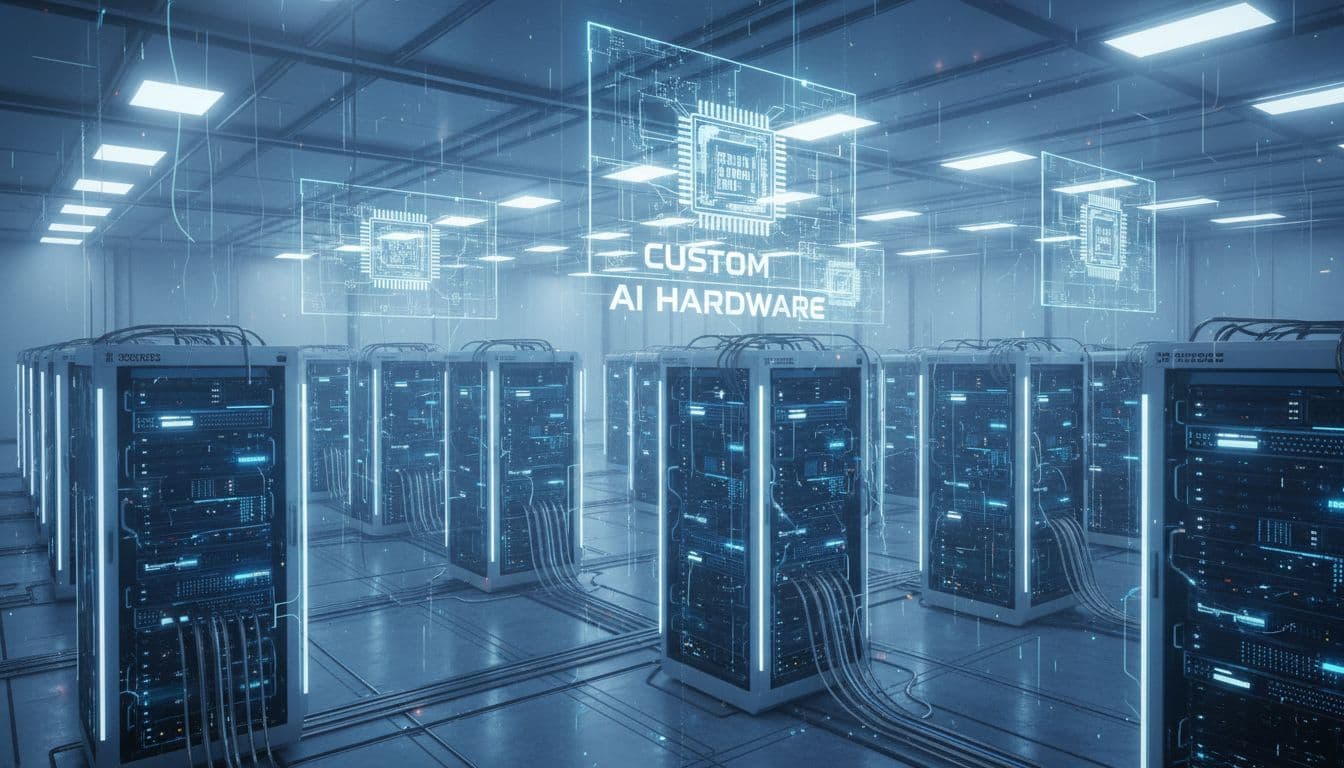
Google’s Bet on Its Own AI Chips
Google has been designing its own AI chips, called TPUs, for years. These chips are built to handle AI workloads inside Google’s data centers. At first, many investors saw TPUs as a side project. Now they look more serious.
Google is using TPUs to run and train its advanced AI models, including systems that power chatbots and other generative AI tools. The company claims that newer versions of its TPUs can compete with or even beat traditional GPU setups in some workloads, especially when tightly integrated with Google Cloud.
If Google can use its own chips for much of its AI work, it may not need as many Nvidia chips as investors once thought. Even a small shift in long-term demand from a company as large as Google could matter a lot for Nvidia’s growth story.
AI Performance Gains Change the Demand Story
Another key detail is efficiency. As AI models and hardware become faster, companies can get the same work done with fewer chips. This does not kill demand, but it does limit how fast it needs to grow.
Google has been talking about big performance gains in its AI systems, both on the hardware and software side. Better chips, smarter model architectures, and more optimized workflows all reduce the total amount of raw compute needed to deliver AI services at scale.
For investors, that matters a lot. Early in the AI boom, many people assumed that demand for chips like Nvidia’s would explode for years with no real ceiling. But if companies can do more with less, and if they mix in their own custom chips, the growth curve for third-party hardware providers could flatten.

What This Means for Nvidia Stock
None of this means that Nvidia is suddenly in trouble. The company still has strong technology, deep relationships, and a massive lead in GPU software ecosystems. Many AI developers still prefer Nvidia because its tools and support are so mature.
However, the risk is that investors have already priced in years of nearly perfect growth. If big buyers like Google start shifting more workloads to in-house chips, Nvidia’s growth could slow. Slower growth, even from a high level, can be enough to shake a stock that has run up on AI excitement.
There is also the simple fact that AI spending is not guaranteed to grow in a straight line. Companies may pull back after heavy investment cycles, or they may look harder for cost savings. Both trends could push them toward cheaper or more controlled options, including custom silicon like TPUs.
Is the Easy Phase of the AI Trade Over?
For many investors, the AI trade has been simple. Buy Nvidia, hold on, and ride the wave. But as Google and other giants reveal more detail about their AI road maps, the story gets more nuanced.
The first phase of the AI trade rewarded hardware providers that could meet a rush of urgent demand. The next phase may look different. It could reward companies that offer full platforms, custom chips, and integrated AI services that lower costs for customers.
In that kind of environment, Google’s strategy makes sense. Controlling more of the AI stack helps it keep control of performance, pricing, and customer relationships. For Nvidia, this shift is a reminder that even market leaders face real competition when the stakes are this high.

What Investors Should Watch Next
For anyone following AI stocks, a few signals are worth watching. First, listen closely to what companies like Google, Microsoft, Amazon, and Meta say about their AI spending plans. Second, watch how often they highlight their own chips versus third-party suppliers.
Third, pay attention to pricing. If AI services start getting cheaper for end users, that may reflect better efficiency behind the scenes. Better efficiency often means more work is getting done per chip, which might limit the upside for pure hardware names.
The AI story is still in its early chapters, and Nvidia will likely remain a key player. But Google’s latest AI wins show that the market will not be owned by a single company. For investors, that is a reason to be more selective and to think carefully about how the AI value chain is shifting over time.
As AI matures, the winners may not be just the chip makers, but also the platforms that control how AI is built, deployed, and sold. Google is making a clear bid for that role, and that should make every AI investor sit up and pay attention.
To contact us click Here .